Preloader

An Ancient Ingredient with a Modern Purpose

Gum Arabic has a fascinating story.

Also known as Gum Acacia, this natural ingredient begins its journey in the dry landscapes of Africa, where Acacia trees have produced their valuable gum for generations. Harvested using traditional methods and valued for centuries, Gum Arabic is today used by manufacturers around the world in everything from food and beverages to confectionery, pharmaceuticals, personal care products and industrial applications.

But what exactly is Gum Arabic? Where does it come from, and why is such a simple natural ingredient capable of doing so many different things?

Its story begins with the tree.

What is Gum Arabic?

Gum Arabic, or Gum Acacia, is a natural gum obtained from Acacia trees of African origin, principally Acacia senegal and Acacia seyal.

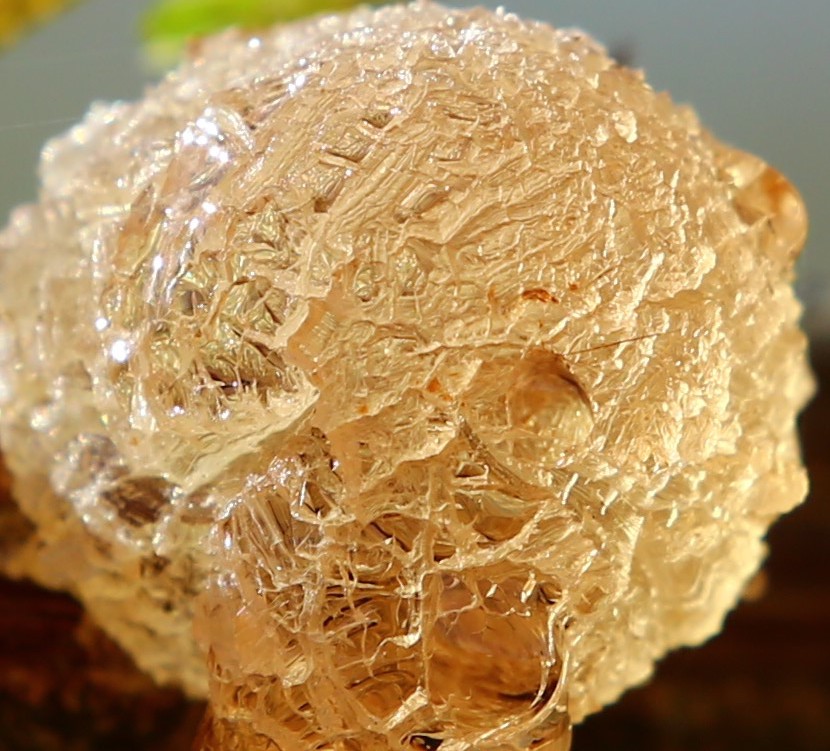
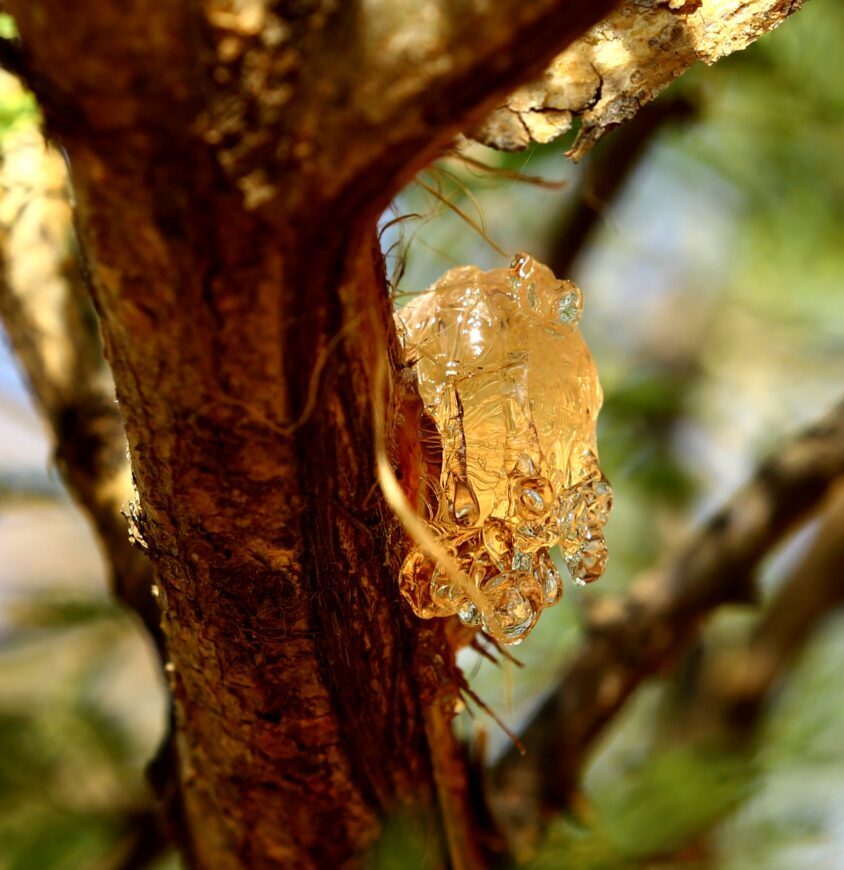
The gum is an air-hardened exudate produced naturally by the tree or encouraged through a traditional process known as tapping. Once the tree has been tapped, gum slowly emerges from the trunk and branches before hardening in the dry air into distinctive amber-coloured droplets and nodules.

These are harvested, cleaned and carefully processed to create the Gum Arabic ingredients used by manufacturers today.

It is an ingredient with an unusual combination of simplicity and sophistication: produced by a tree, harvested by hand, yet possessing functional properties that make it valuable to modern food science and manufacturing.

The Story of Our Gum Acacia

From Tree to Powder

Before Gum Arabic reaches a finished product, it passes through a remarkable chain of harvesting, selection and processing.

Much of this begins within Africa’s Gum Belt – the vast dryland region extending across the continent from Senegal in the west, through countries including Mali and Chad, to Sudan in the east.

Here, Acacia trees grow in conditions to which they are naturally well adapted.

Our Gum Arabic is sourced directly from Sudan through our sister company, giving us a close connection to the origin of this extraordinary natural ingredient.

The journey begins with the Acacia tree.

During the tapping season, traditionally beginning in autumn, carefully controlled incisions are made in the tree and small sections of bark are removed.

The tree responds by producing gum, which slowly exudes from the exposed areas.

In the dry air, this gum gradually hardens into the beautiful, jewel-like lumps characteristic of natural Gum Acacia.

It is a patient process. Once tapped, the trees need time to do the rest.
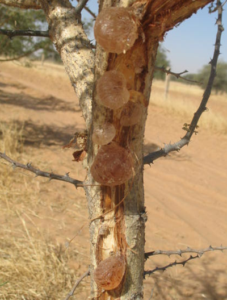
Gum Tapping

Several weeks later, when the gum has hardened and dried sufficiently, harvesting can begin.

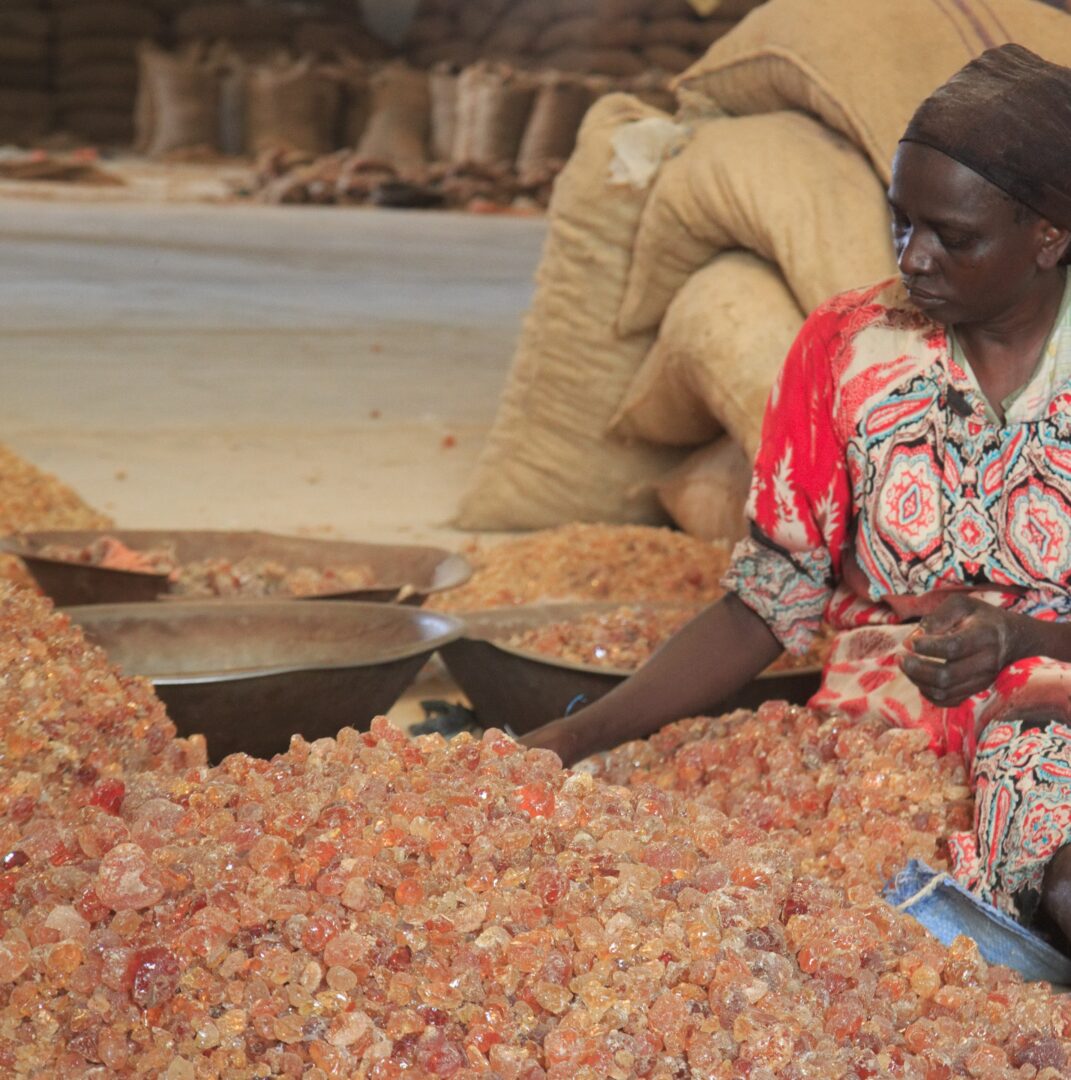
The raw Gum Arabic is carefully collected by hand.

Gum that has formed within easy reach can be picked directly from the tree. Pieces higher among the branches can be gently dislodged using a long pole, traditionally with a container positioned at its end to catch the gum.

The result is an ingredient whose journey from tree to manufacturer begins with human hands rather than an industrial production line.
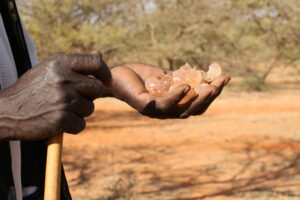
Gum Collection

Freshly collected Gum Arabic still contains moisture.

The harvested gum is therefore laid out and allowed to dry naturally in the sun.

Reducing its moisture content makes the gum easier to handle and helps improve its stability during storage and transportation.

Once sufficiently dried, the next stage is all about purity.
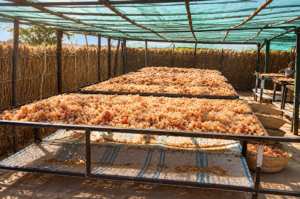
Gum Drying

Raw Gum Arabic is a natural agricultural product, so material collected in the field can contain small pieces of bark, stones or other foreign matter.

The dried gum is therefore carefully cleaned and inspected, traditionally by hand, to remove these materials.

This seemingly simple stage is an important part of preparing Gum Acacia for further selection and processing.
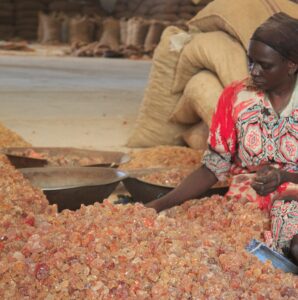
Gum Manual Cleaning

Not all Gum Arabic is the same.

After cleaning, the Acacia senegal and Acacia seyal are sorted according to quality.

Colour and appearance can form part of this grading process, with the lightest and clearest grades traditionally attracting premium values.

Understanding these differences matters because the characteristics of the raw material ultimately influence how it can be processed and used.

Only after this selection does the gum begin its transformation into the familiar ingredients used by manufacturers.
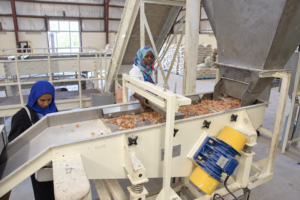
Morouj UK Process

Raw Gum Arabic can be processed into several different physical forms.

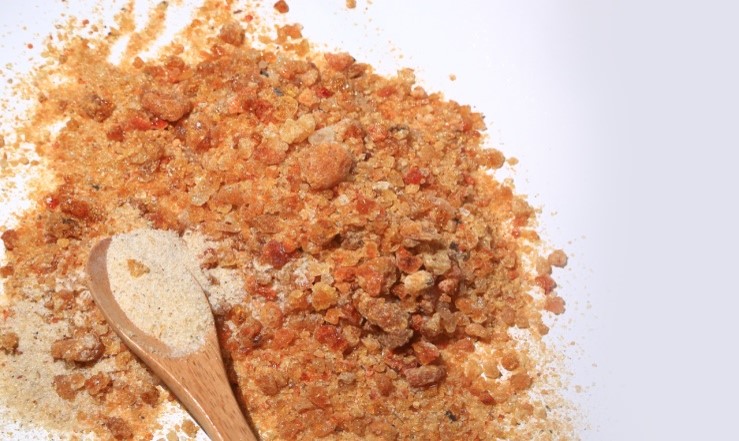
It may first be mechanically crushed to produce kibbled Gum Arabic, consisting of smaller and more manageable particles.

Further milling can produce a mechanical Gum Arabic powder.

For many modern food and beverage applications, kibbled Gum Arabic can then undergo spray drying. The gum is dissolved and processed under controlled conditions to create a fine, consistent and microbiologically stable food-grade Gum Arabic powder.

From a natural exudate collected from an Acacia tree to a sophisticated functional ingredient, the transformation is remarkable.

Yet importantly, the Gum Arabic itself remains derived from a natural source.
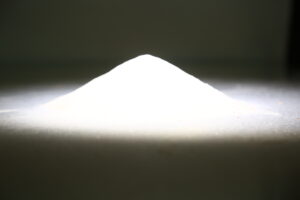
Gum Processing

Gum Arabic and Nutrition

There is another reason Gum Arabic is receiving increasing attention: dietary fibre.

Gum Arabic consists of at least 90% soluble dietary fibre, making it an interesting ingredient for manufacturers developing foods, beverages and nutritional products with increased fibre content.

It is plant-based and GMO-free, and its soluble fibre can be fermented by bacteria within the gut, which is why Gum Arabic is also widely recognised for its prebiotic properties.

This combination of nutritional and functional characteristics makes Gum Acacia particularly interesting to today’s food and beverage industry.

Rather than simply contributing fibre, it can potentially provide useful formulation functionality at the same time.


What is Gum Arabic Used For?

The easiest answer is: far more than you might expect.
The unique properties of Gum Arabic have led to its use across an exceptionally broad range of products and industries.

A Natural Ingredient with a Remarkable Journey

Few ingredients connect ancient tradition and modern technology quite like Gum Arabic.

It begins with an Acacia tree growing in one of the world’s most challenging environments. It is tapped and harvested by hand, dried beneath the African sun, carefully cleaned and sorted, and ultimately transformed into an ingredient capable of meeting the requirements of sophisticated modern manufacturing.

For thousands of years, people have found new ways to use Gum Arabic.

Today, scientists, food technologists and product developers continue that same story – finding new applications for an ingredient that nature perfected long before we understood the chemistry behind it.

From Acacia tree to finished product, Gum Arabic is where natural heritage meets modern functionality.